




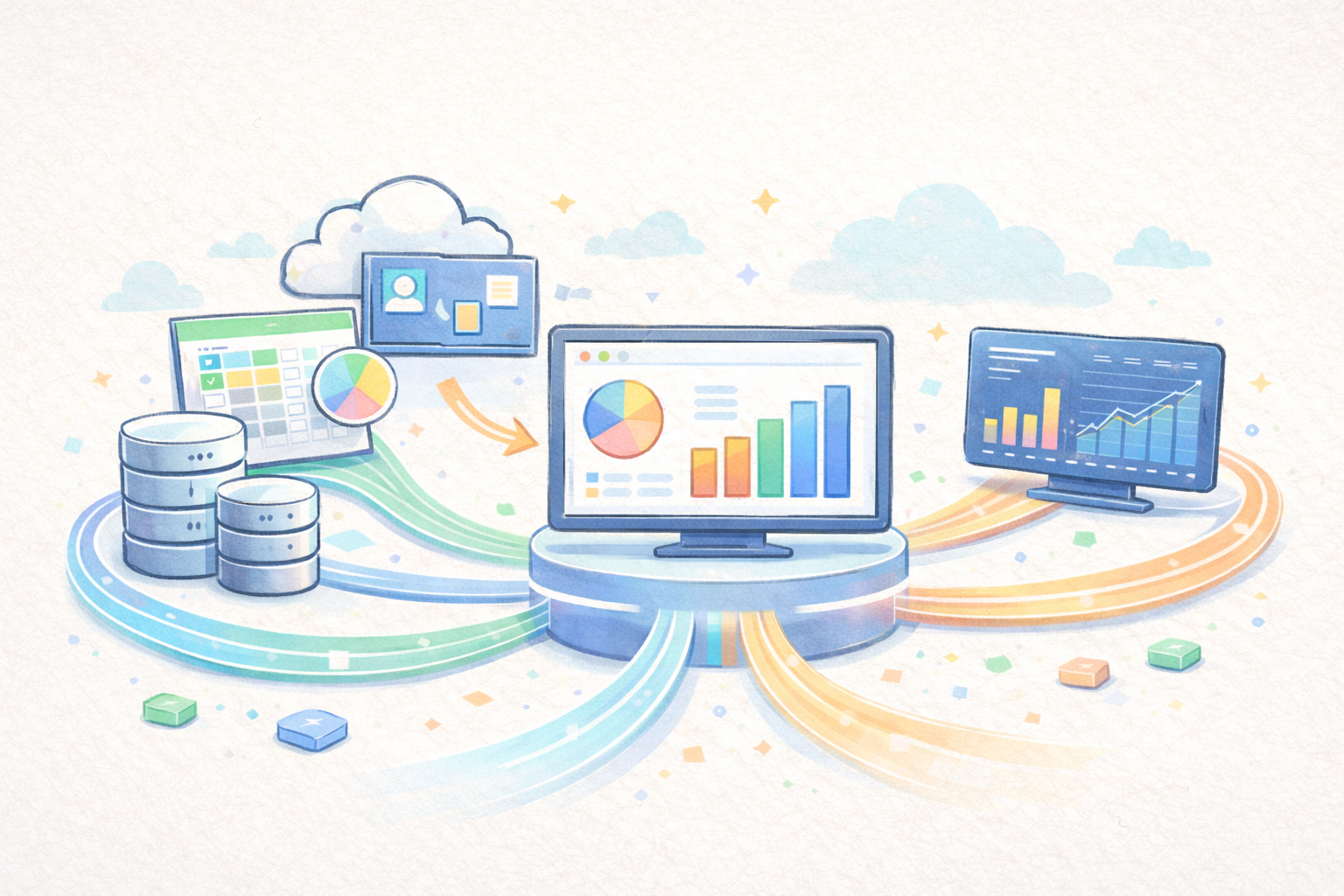
What Is Data Consolidation?
A Practical Guide for Modern Businesses
Contemporary businesses are data-driven, but the efficient use of data has become more complex. Data is scattered across cloud infrastructure, in-house databases, SaaS applications, APIs, and other external systems. As a result, organizations often struggle with disparate reports, slow insights, and eroding trust in the numbers they use every day.
Data consolidation is a solution to this problem. It combines scattered data into one reliable source. Instead of working independently, organizations will have one source of truth for analytics, reporting, and decision-making. Data consolidation, when done right, is a catalyst for business growth and not a headache to maintain.
Without data, you’re just another person with an opinion.
W. Edwards Deming
However, as the volume of data continues to grow, the ability of legacy systems and ad-hoc pipelines to handle this data becomes increasingly inadequate. This is because disconnected systems lead to incomplete reporting, inconsistent metrics, and long turnaround times for analytics queries. Eventually, this leads to increased operational expenses and a reduced ability to react to market changes.
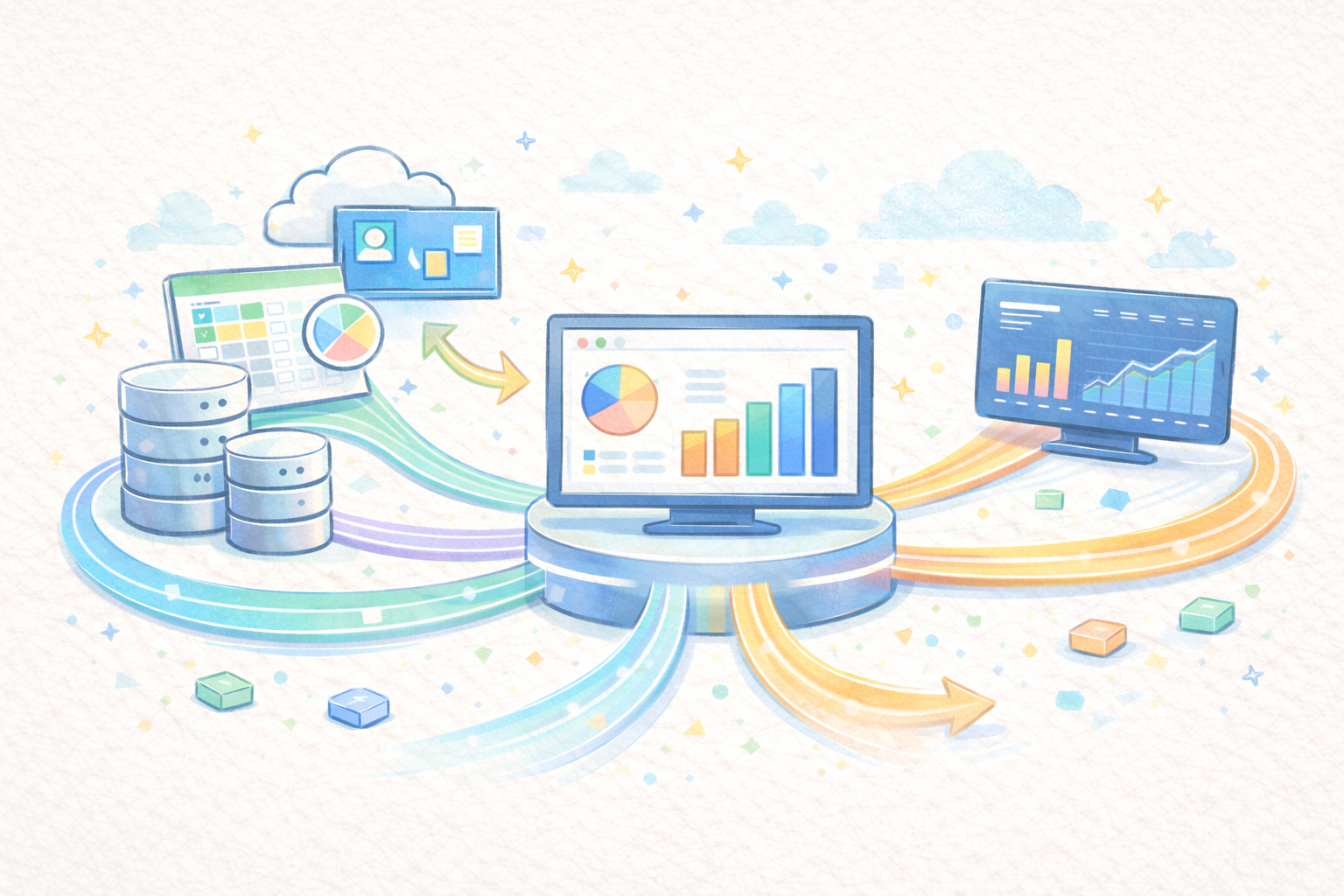
It is for this reason that the modern data integration process relies on carefully crafted data pipelines. Data pipelines are responsible for the movement of data from various sources, through stages of ingestion, transformation, storage, and orchestration, until analytics-ready outputs are delivered to dashboards, applications, and machine learning models. Well-functioning data pipelines are no longer a backend issue; they form the backbone of modern intelligence.
How Modern Data Pipelines Enable Consolidation
Modern data pipeline: A modern data pipeline begins with the gathering of data from various sources such as transactional databases, SaaS applications, APIs, and event streams. Based on business needs, the data can be ingested in real-time for operational analytics or in batches for analytics purposes. In the transformation stage, the data is cleaned, validated, and made consistent with business logic.
After processing, the data is centralized in cloud data warehouses or lakehouse systems, where it can be shared across various teams. Orchestration and monitoring enable the pipelines to run smoothly, while governance and lineage provide insights into the data movement and evolution. This is critical for scaling analytics and building trust in data.
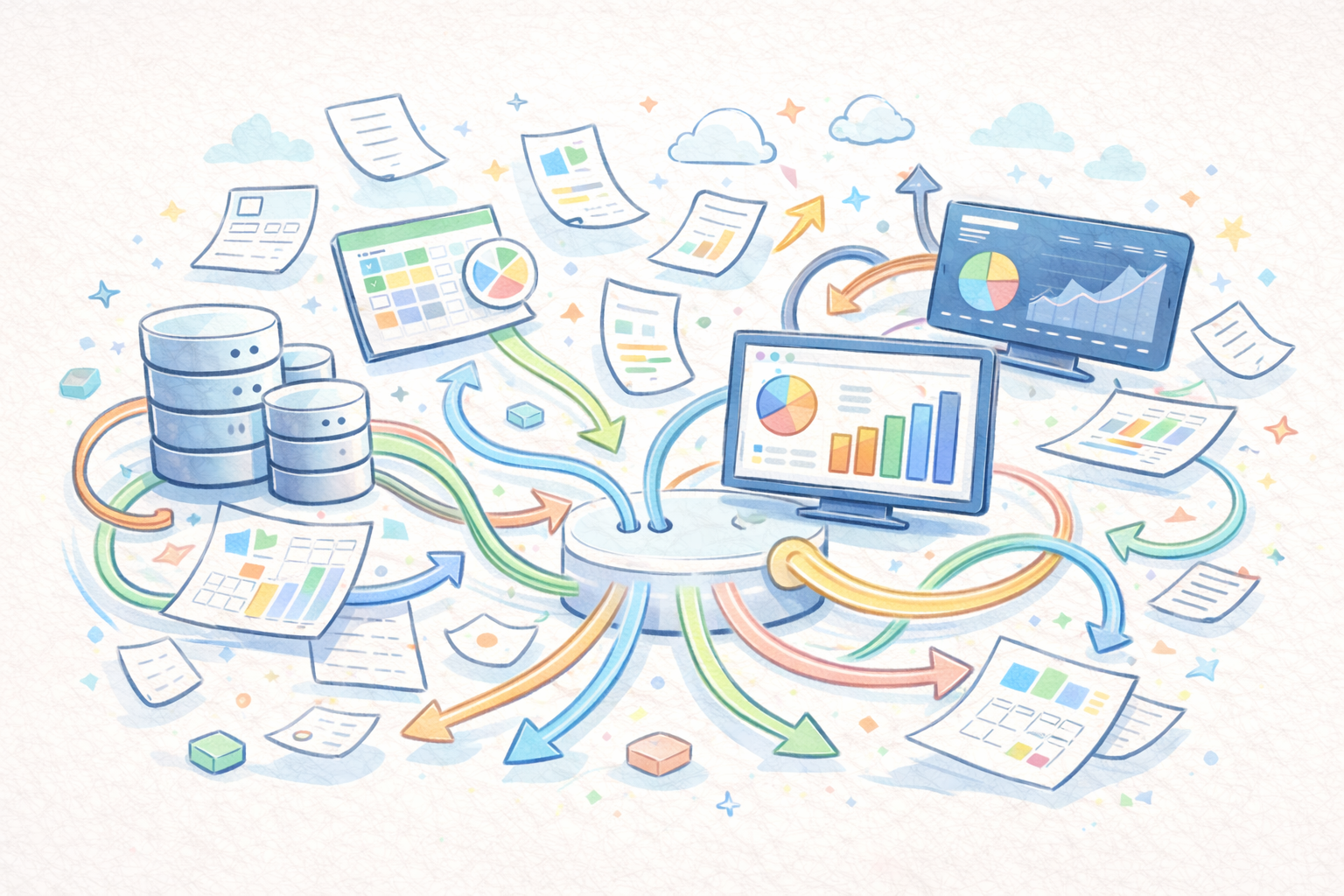
Why Businesses Are Rethinking Traditional Pipelines
Organizations are actively replacing traditional data pipelines because of concerns about data quality, a lack of transparency, and poor governance. With the increasing regulatory requirements and analytics becoming more central to decision-making, organizations need more control over the processing, security, and consumption of data.
Contemporary data consolidation focuses on trust, security, and usability. Strong governance capabilities ensure compliance and protect confidential data, and greater observability and automation reduce the likelihood of failure and the need for human intervention.
Turning Data Consolidation into a Competitive Advantage
Data consolidation has emerged as a capability rather than an option for the modern enterprise. Enterprises that focus on building strong data pipelines are able to realize better visibility into their business, stronger analytics, and faster decision-making.
By focusing on automation, observability, and governance, organizations can take unrefined data and turn it into a valuable asset. Platforms like Probyto AI help teams build data pipelines that are scalable and transparent, thus avoiding unnecessary complexity.
After reading this, can you clearly explain where your business data comes from, how it is combined, and which teams rely on it for decisions?